Facts, Frictions, and a Wake-Up Call in Paris
My reflections from Digital Learning Week 2026
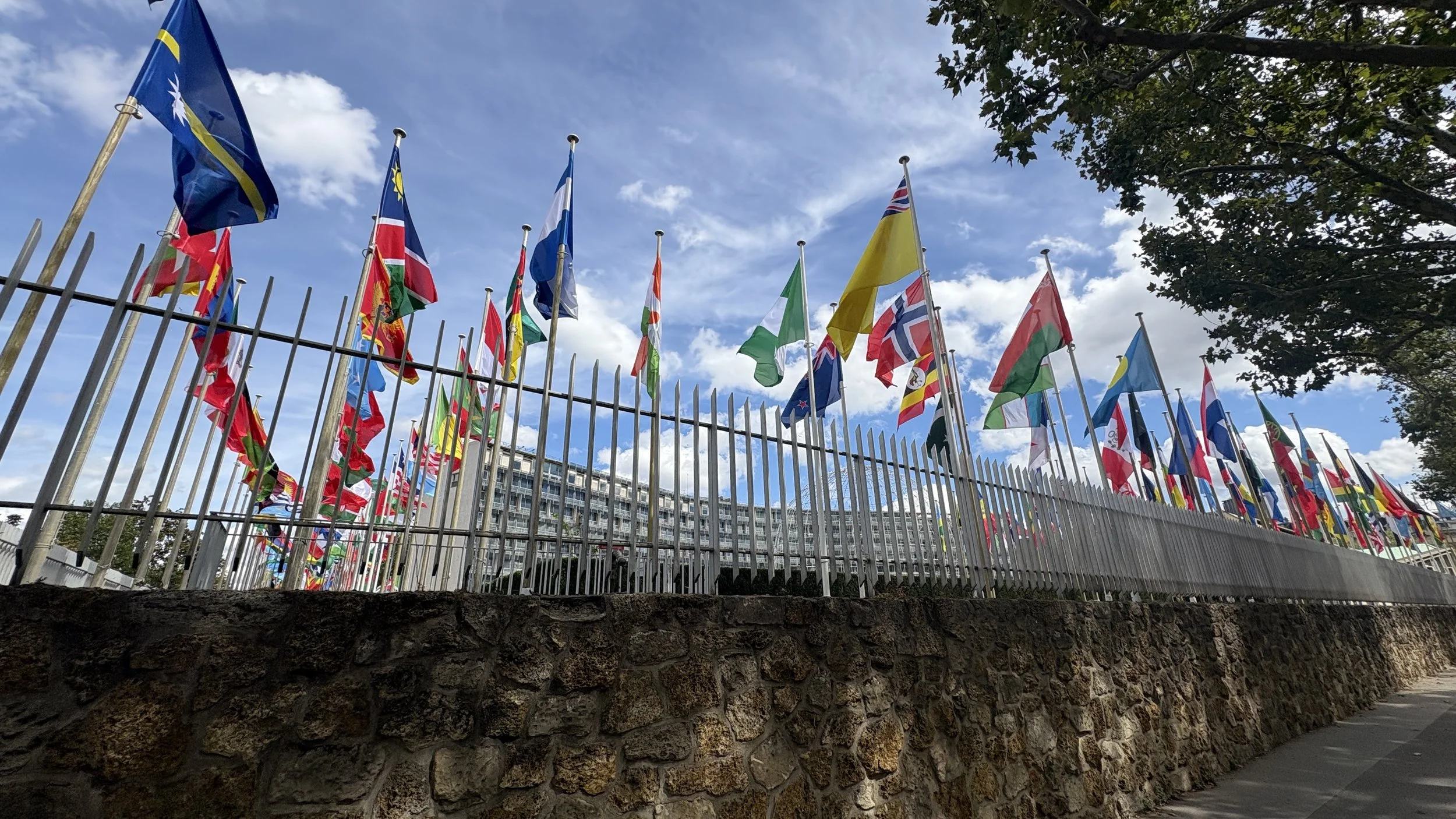
I spent four days at UNESCO Headquarters for Digital Learning Week 2026, and I'm still sorting through my notes.🤓 The theme, “Education in the Age of AI: Facts, Frictions, Frontiers,” sounded like it could go either way. Either a room full of ministers nodding politely at slides, or something that actually confronts how unprepared most education systems are for what's coming. It turned out to be the latter, and it brought up serious questions about sovereignty, governance, and censorship.
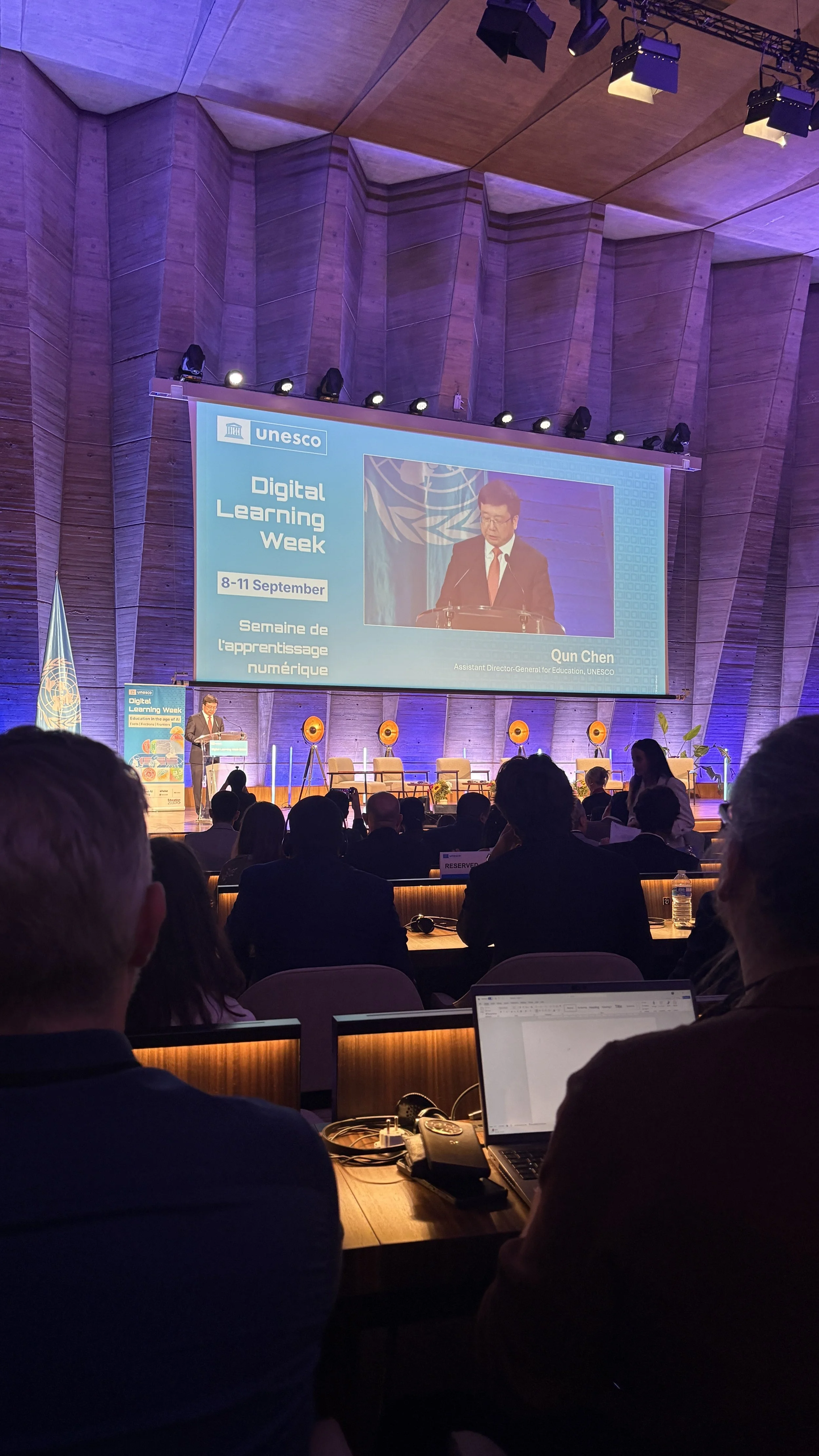
The week kicked off with the official opening, moderated by Qun Chen, UNESCO's Assistant Director-General for Education. Khaled El-Enany, UNESCO's Director-General, set the tone in person, and the roster of voices around him made it clear this wasn't going to be a low-stakes gathering. Doreen Bogdan-Martin, Secretary-General of the ITU, sent a video message, and Amandeep Singh Gill, the UN Under-Secretary-General and Special Envoy for Digital and Emerging Technologies, spoke as well.
Having ITU and the UN's digital tech envoy in the same opening as UNESCO's own leadership told me something before a single panel started: this event wasn't positioning AI in education as a niche ed-tech topic. It was being framed as digital governance, full stop, with education as one very high-stakes front.
The keynote that set the tone
The opening keynote came from Shingai Manjengwa, who heads AI education at the Mila Quebec AI Institute. Her talk was framed as a question: does AI need a nudge or a kick to move toward safety and sovereignty in education? I walked in expecting a fairly standard “let's be thoughtful about AI” opener. Instead, she made a case that gentle nudges aren't going to cut it anymore. Systems, governments, and institutions need something closer to a kick if they want any real say over how AI shapes classrooms rather than just absorbing whatever big tech ships next.
What stuck with me is how she reframed “safety” as inseparable from sovereignty. It's not just about guardrails on a chatbot. It's about who controls the infrastructure, the data, and the decisions about what AI in education even looks like for a given country or community. That distinction feels obvious once you hear it, but I don't think I'd fully connected the dots before.
Plenary panels: sovereignty, agency, and scale
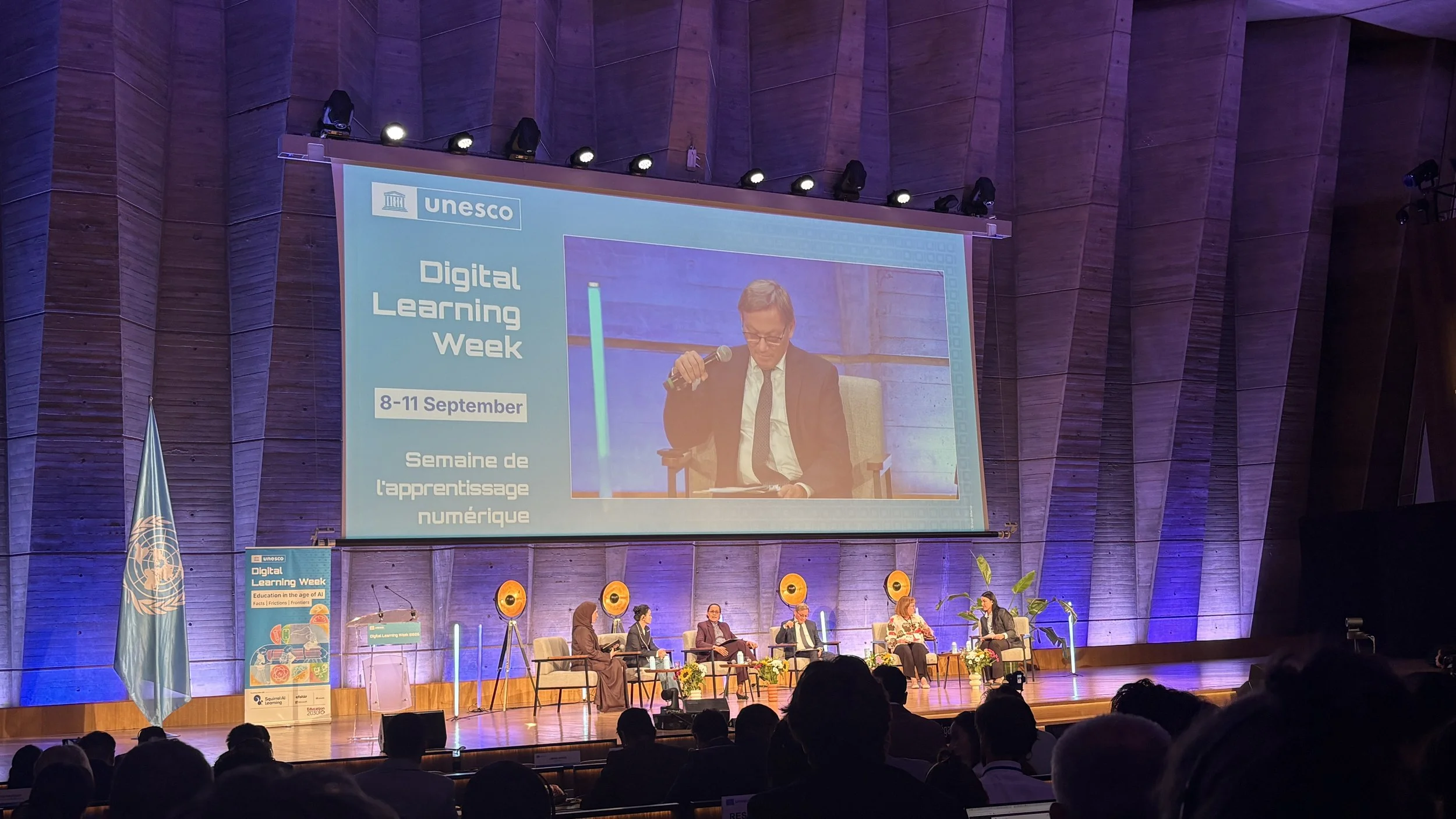
The panel, “Emerging frontiers, plural pathways: Sovereignty, agency and scale,” is where the room's energy really shifted. Moderated by Sobhi Tawil, UNESCO's Director of the Future of Learning and Innovation Division, the panel put together a lineup that made the abstract concrete fast: Sarah Al Amiri, Minister of Education for the UAE, Raïssa Malu, Minister of State for National Education in the DRC, Mikaela Nylander, State Secretary at Finland's Ministry of Education, Chang Qing, Vice Chairman of Squirrel AI, and Durdona Boynazarova, a teacher from Termez, Uzbekistan.
That mix was the point, I think. We had a Gulf state with serious AI investment capacity sitting alongside the DRC, where the sovereignty conversation looks completely different, plus a Nordic system usually held up as a policy model, an AI company executive, and a classroom teacher who has to live with whatever gets decided in rooms like this one. My take: a lot of “digital sovereignty” language at these events can feel aspirational to the point of being hollow. This panel didn't feel that way. There was real friction between speakers about whether public-interest AI is a viable near-term strategy or a nice idea that quietly loses to procurement budgets and infrastructure gaps. Nobody resolved it, and I actually respected that more than a tidy consensus would have earned. Having Boynazarova on stage as the only classroom-level voice among ministers and executives was also, frankly, a smart move. It kept the panel honest.
The takeaway nobody said out loud: whose facts get to be “facts”?
Here's the part I keep coming back to, and it's the thing I think the sovereignty framing was dancing around without quite naming directly. “Digital sovereignty” sounds neutral, almost technical, like it's just about servers and data centers. But sitting in that room, listening to ministers from very different political systems talk past each other politely, it became clear that sovereignty is also a euphemism for something much thornier: who gets to decide what an AI tutor is allowed to teach, discuss, or even acknowledge exists.
Every country represented on that stage has its own answer to what counts as acceptable subject matter, and those answers genuinely conflict. Data protection regimes differ. Content moderation philosophies differ. And some of what one government frames as “cultural context” or “local values” is, in plainer terms, a decision to keep AI tools from discussing human rights or gender equality at all. Nobody used those exact words from the podium, but it was the subtext running under half the sovereignty conversation, and I don't think it got the direct airtime it deserved.
That's the friction I left most unsettled by, honestly. A global AI tutor built to be “safe” in one country's terms might be, by design, unable to affirm basic rights in another. UNESCO's public-interest AI framing is meant to counter exactly this kind of fragmentation, but the panel made obvious how hard that is when the fragmentation is about values, not just infrastructure. I don't have a tidy conclusion here. I just don't think “sovereignty” and “public access” can keep being discussed as if they're purely technical problems when they're this politically loaded underneath.